
News insight
How Much Weight can you Lose with Acxion
Feb
Expected Weight Loss with Acxion (Phentermine Hydrochloride): Evidence from Clinical Studies and Real-World Data (2026 Update)
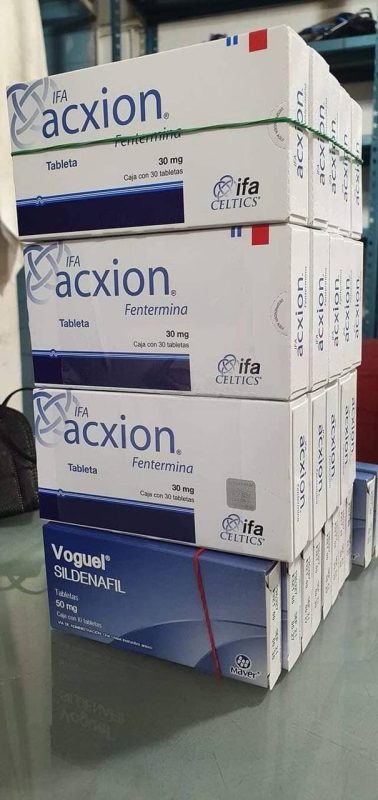
Acxion®, a brand of phentermine hydrochloride widely prescribed in Mexico and Latin America, serves as an anorexigenic agent for short-term adjunctive treatment of obesity. Patients and clinicians frequently inquire about anticipated weight loss. This article synthesizes data from clinical trials, observational studies, and meta-analyses to provide evidence-based estimates of weight reduction achievable with phentermine (including Acxion formulations), when combined with caloric restriction and physical activity.
Short-Term Weight Loss (3–6 Months)
Phentermine demonstrates consistent efficacy in the initial months of treatment, with the most pronounced effects occurring early due to robust appetite suppression.
- A 2021 clinical trial in a Mexican obese population (n > 800) reported:
- At 3 months: Average loss of 4.5–5.8 kg (depending on 15 mg vs. 30 mg dose), with 50–62% of patients achieving ≥5% body weight reduction and 16–24% achieving ≥10%.
- At 6 months: Average loss of 6.9–8.4 kg, with 77–82% achieving ≥5% and 41–44% achieving ≥10% reduction.
- Aggregated data from multiple studies indicate:
- Average 3–5% of initial body weight lost after 3 months.
- Average 5–9% (approximately 5–10 kg for a 100 kg individual) after 6 months.
- In responsive patients (approximately 70–80%), losses often reach 7–10% by 6 months.
For example, a Korean study showed an average 9.3% loss (7.2 kg) over 14 weeks.
Longer-Term Weight Loss (Beyond 6 Months)
Phentermine is officially approved for short-term use (up to 12 weeks in many jurisdictions), but observational and extended studies support cautious longer-term application in select patients under medical supervision.
- Real-world cohort studies (e.g., electronic health records analysis):
- Continuous use >12 months: Average additional 7–10% loss compared to short-term users, with sustained reductions of 7–10% at 24 months.
- Limited long-term randomized data exist, but ongoing trials (e.g., LEAP trial, initiated pre-2026) aim to evaluate 24-month outcomes. Preliminary observational evidence suggests maintained losses of 7–12% in adherent patients, though tolerance may reduce ongoing efficacy.
Note: Weight regain is common upon discontinuation without sustained lifestyle changes.
Factors Influencing Weight Loss Outcomes
Variability in results is influenced by several factors:
- Dose — Higher doses (30–37.5 mg) generally yield greater initial loss than 15 mg.
- Adherence to lifestyle interventions — Phentermine alone produces minimal results; optimal outcomes require a 500–1,000 kcal/day deficit, increased physical activity, and behavioral modifications.
- Individual response — Approximately 20–30% of patients are non-responders (<3–5% loss at 3 months), warranting discontinuation.
- Baseline characteristics — Greater absolute losses (in kg) occur in individuals with higher initial body weight.
- Formulation — Extended-release variants (e.g., Acxion AP) may improve tolerability and consistency but show similar overall efficacy to immediate-release.
Clinical Significance and Guidelines
A ≥5% weight loss is considered clinically meaningful, improving cardiometabolic risk factors (e.g., blood pressure, glucose, lipids). Phentermine facilitates this threshold in 60–80% of patients over 3–6 months when properly used.
Compared to newer agents (e.g., GLP-1 receptor agonists achieving 15–20% loss), phentermine offers modest but rapid short-term results at lower cost, making it suitable as an initial “kickstart” therapy.
Considerations and Limitations
Weight loss with Acxion/phentermine is not indefinite; tolerance develops, and rebound gain is frequent post-cessation. Treatment requires medical supervision due to potential adverse effects (e.g., cardiovascular stimulation, insomnia) and contraindications (e.g., hypertension, history of substance abuse).
In 2026, emerging data reinforce short-term efficacy while emphasizing the need for comprehensive obesity management, including transition to maintenance strategies.
Conclusion Patients using Acxion (phentermine) can reasonably expect an average loss of 4–8 kg (5–9% of body weight) over 6 months, with many achieving clinically significant reductions when combined with lifestyle interventions. Individual results vary, and sustained success depends on long-term behavioral changes. Consultation with a healthcare professional is essential for personalized assessment and monitoring.
References: Márquez-Cruz et al. (2021, Mexican trial); Lewis et al. (2019, long-term cohort); aggregated reviews from MedlinePlus, Mayo Clinic, and ongoing trial registries (NCT05176626).
